


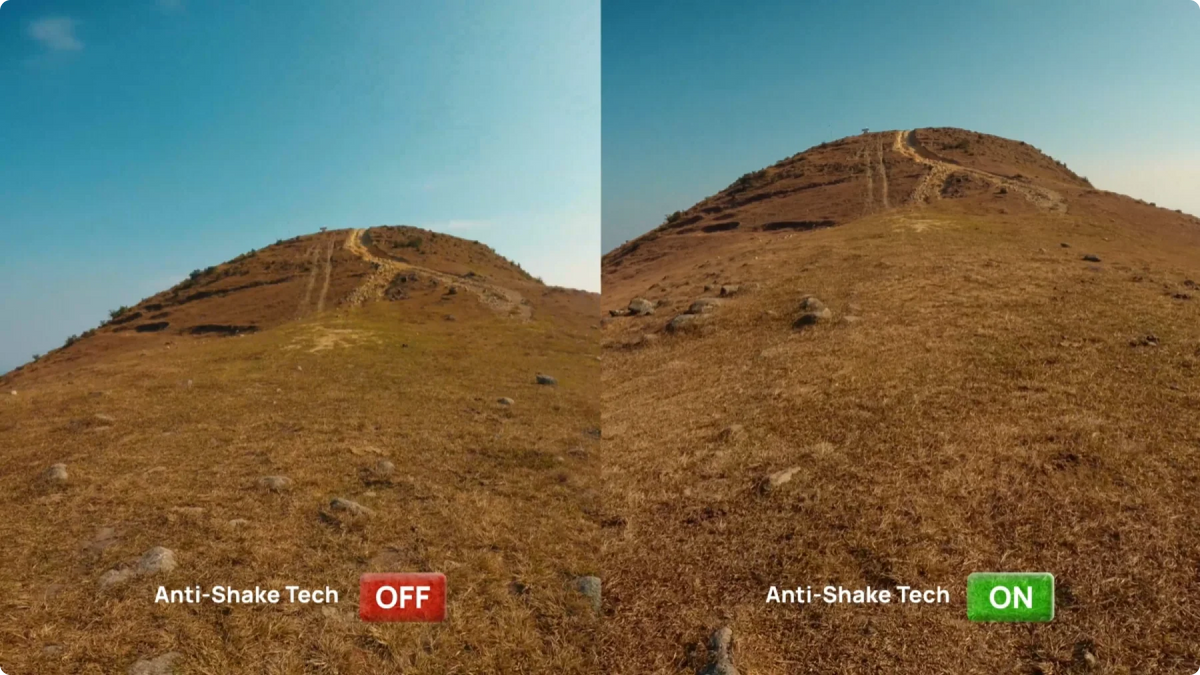
A first-person video can be sharp and still feel tiring to watch. Rover EIS Stabilization helps reduce the effect of road vibration, gravel, steering changes, and head movement so the ride remains easier to review and share.
Camera glasses move with the rider. Every glance, bump, change in posture, and turn can become part of the captured frame. That is one reason stabilization deserves attention alongside resolution and field of view when choosing cycling camera glasses.
EIS stands for electronic image stabilization. In practical terms, Rover uses digital correction to reduce the visible effect of some movement in the video. The goal is not to make a rough trail look like a studio shot. It is to make the footage more comfortable to watch and more useful after the ride.
What creates shake in a ride recording?
Different surfaces create different kinds of movement. Road seams and rough asphalt add small, rapid vibration. Gravel produces uneven vertical motion. Braking and steering can shift the frame quickly. Even a smooth route can look restless when the camera follows a rider's natural head movement.
| Ride situation | What can appear in the frame | Why stabilization helps |
|---|---|---|
| Urban roads and patched asphalt | Fine vibration and small jumps in the image. | Keeps the scene easier to follow during review. |
| Gravel and trail sections | Uneven vertical movement and rapid shake. | Reduces visual fatigue in longer clips. |
| Turns, braking, and descents | Fast changes in direction or rider posture. | Creates a calmer base for sharing or editing. |

Stabilization works with the rest of Rover's capture system
A stable frame is only one part of usable footage. Rover combines it with a wide first-person view and high-resolution capture; our guide to 3K 60FPS HDR recording explains why detail and motion clarity matter outdoors. The 120-degree POV article covers how a wider view can retain more of the road and surrounding context.
These features address different parts of the same problem. Field of view determines how much the camera sees. Resolution and frame rate affect detail and motion. EIS helps the resulting frame feel less unsettled. None of them removes the need to ride safely or guarantees a perfect clip on every surface.

A realistic way to evaluate EIS
When comparing wearable camera glasses, look at footage from the roads you actually ride. A smooth indoor demo cannot answer how a camera behaves on broken pavement, a gravel connector, or a fast descent. EIS should be judged by whether the clip is easier to watch, review, edit, and share while preserving the natural first-person perspective.
Rover's stabilization is therefore a practical usability feature, not a promise that every bump disappears. It helps turn a ride recording into footage that remains worth using once the ride is over.
FAQ
What is EIS stabilization on Rover?
EIS is electronic image stabilization. It uses digital correction to reduce the visible effect of movement in captured footage.
Does EIS remove every bump from cycling footage?
No. It can reduce shake and make footage easier to watch, but real road, gravel, steering, and head movement remain part of the ride.
Why does stabilization matter for camera glasses?
The camera moves with the rider's face. Stabilization helps make footage from glances, posture changes, road vibration, and rough surfaces more usable afterward.


